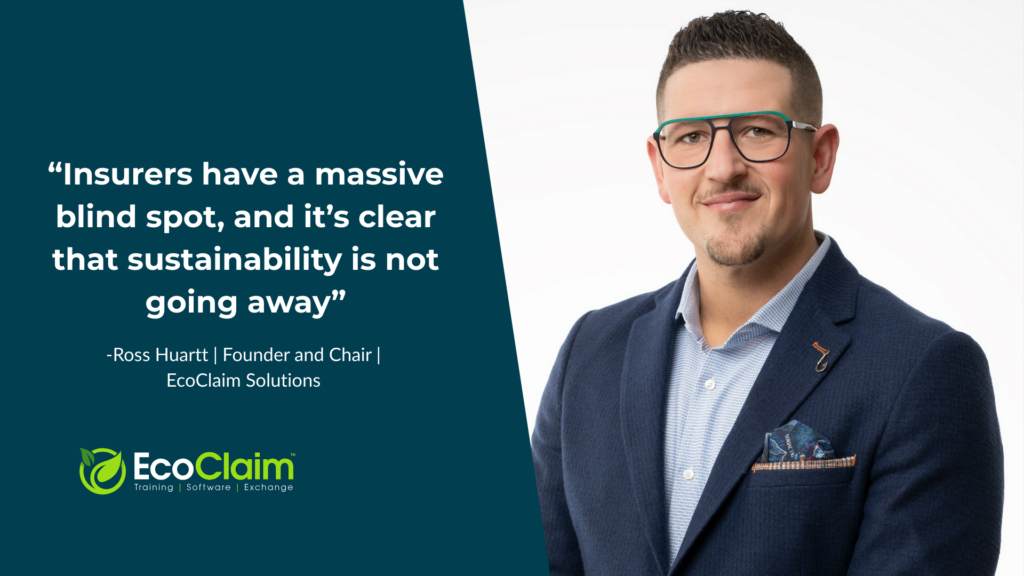
Scope 3 in the claims supply chain is insurers’ ‘massive blind spot,’ says expert
EcoClaim Solutions founder and chair Ross Huartt was featured in Insurance Business Canada, sharing why claims spending may be one of insurers’ biggest and least measured Scope 3 exposures.
“They have a duty of care, not only to the world, but to their shareholders, if they can do things that reduce that effect and reduce their expenditure” – Ross Huartt, Founder and Chair, EcoClaim Solutions
Scope 3 reporting is accelerating, but for many insurers, the hardest emissions question is still unanswered: what is actually happening inside the claims supply chain. While climate risk discussions often center on frameworks and disclosure readiness, the emissions generated through claims vendors are frequently left to high-level estimates.
In the article, Ross explains that insurers often rely on proxy methods that fall at the lowest end of common data-quality scales, which limits what can be verified, managed, and reduced. The result is a major operational blind spot in an area insurers can influence through procurement, vendor performance expectations, and claims program design.
Ross also points to the scale of the opportunity: in Canada, claims-related Scope 3 emissions are tied to an estimated $20B to $30B in annual claims expenditure, making claims one of the largest parts of an insurer’s footprint where better data can unlock measurable action.